
Author's details
- Hakim A Abubakre
- BA (Hons) International Business Management, Msc Digital Marketing.
Reviewer's details
- Dr. Khashau Eleburuike
- MBBS (Ilorin) MSc. Global Health Karolinska Institute.
- Resident doctor in family medicine in Northen Sweden.
- Date Published: 2025-09-07
- Date Updated: 2026-01-02
Rosacea
Key Messages
- Rosacea is a lifelong skin condition that causes facial redness, bumps, and burning.
- Symptoms can affect the eyes and often come and go.
- Gentle skincare, sun protection, and stress management help control symptoms.
- Avoid harsh products, extreme weather, spicy foods, and alcohol to reduce flare-ups.
- See a doctor if symptoms worsen, affect your life, or involve eye problems.
Introduction
What is Rosacea?
- A long-term skin condition that causes redness, dark patches, bumps, and burning on the face (cheeks, nose, forehead, chin).
- Not caused by dirt or poor hygiene.
- Can affect eyes (dryness, irritation).
- Symptoms may come and go.
Discussion
Signs & Symptoms
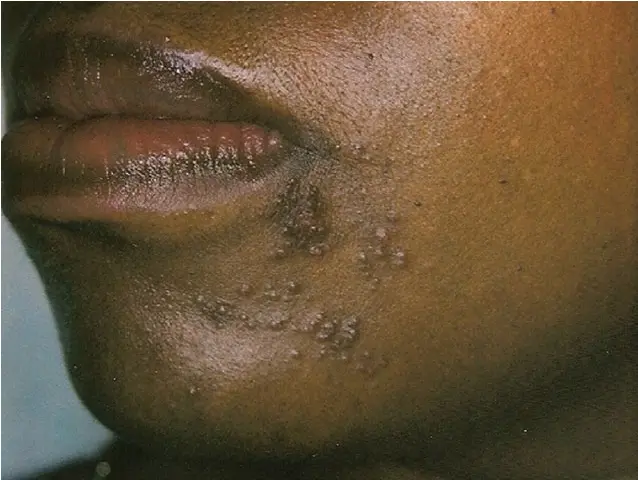
- Redness or dark patches on the face
- Visible blood vessels
- Small pus-filled bumps (like acne, but no blackheads)
- Burning or stinging sensation
- Thickened skin (especially on the nose)
- Eye irritation (dryness, redness, swelling)
Do’s (Self-Care)
- Protect from sun: hat, shade, sunscreen (SPF 30+).
- Wash face gently with mild cleanser twice daily.
- Use moisturizer for sensitive skin.
- Drink enough water.
- Manage stress (exercise, rest, relaxation).
- Clean eyelids gently with a warm cloth if eyes are affected.
Don’ts (Avoid Triggers)
- Harsh soaps or scrubbing the face.
- Products with alcohol, menthol, fragrance, or strong acids.
- Too much sun or strong wind.
- Very hot drinks, spicy foods, alcohol.
- Stress and over-exercising.
When to See a doctor
- If redness or bumps don’t improve.
- If you have eye problems (dryness, blurred vision, sensitivity to light).
- If symptoms affect your confidence, work, or social life.
- If you notice infection (pus, swelling, oozing).
Conclusion
Rosacea is a lifelong condition without a cure, but with the right care and treatment, symptoms can be controlled and quality of life improved.
Related Topics
References
- World Health Organization (WHO). Skin conditions and their impact on people’s lives. 2023.
- National Rosacea Society. Patient information on rosacea. https://www.rosacea.org
- Gallo RL, Granstein RD, Kang S et al. Rosacea comorbidities and future research: the 2017 update by the National Rosacea Society Expert Committee. J Am Acad Dermatol. 2018;78(1):167–170.
- Ogunbiyi A. Skin of colour and rosacea: challenges in diagnosis and management. Clin Cosmet Investig Dermatol. 2020;13:401–408.
Key Messages
- Rosacea is a lifelong skin condition that causes facial redness, bumps, and burning.
- Symptoms can affect the eyes and often come and go.
- Gentle skincare, sun protection, and stress management help control symptoms.
- Avoid harsh products, extreme weather, spicy foods, and alcohol to reduce flare-ups.
- See a doctor if symptoms worsen, affect your life, or involve eye problems.