Author's details
- Assayouti Shifau Badmas
- Bsc Msc (in view) in Human physiology, department of physiology, University of Ilorin.
Reviewer's details
- Dr. Khashau Eleburuike.
- MBBS (Ilorin) MSc. Global Health Karolinska Institutet. SFAM, Socialstyrelsen.
- Consultant in family medicine in Norrbotten County, Sweden.
- Date Published: 2026-02-12
- Date Updated: 2026-02-12
Down Syndrome in African Children: What Parents should know
Key Messages
- Down’s Syndrome is caused by an extra copy of chromosome 21 and is not due to anything parents did.
- It occurs in about 1 in 700 to 1,000 babies in Sub-Saharan Africa, with higher risk for older mothers.
- Children with Down’s Syndrome may have distinctive physical features and slower development, but each child is unique.
- There is no cure, but early support and care help children lead meaningful lives.
- Myths about Down’s Syndrome are common, but it is a genetic condition and not contagious or caused by curses.
Down’s Syndrome is a condition that a baby is born with. It happens when the baby has an extra copy of chromosome 21. Chromosomes are tiny structures inside the body that carry information about how we grow and develop.
Most people have 46 chromosomes, but someone with Down’s Syndrome have 47. This extra chromosome affects the way the child grows, learns, and develops. It is not caused by anything the mother or father did during pregnancy.
How Common is Down’s Syndrome?
In Sub-Saharan Africa, it is estimated that 1 in every 700 to 1,000 babies are born with Down’s Syndrome. It can happen to any family, regardless of tribe, religion, or social class. However, the chances increase slightly if the mother is older than 35 years.
Signs and Features
Children with Down’s Syndrome often have:
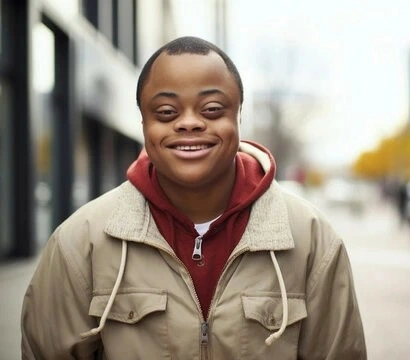
- A flat face and nose
- Eyes that slant upwards
- Small ears and mouth
- Short neck and small hands
- Loose joints and muscles
- Slower physical and mental development
Each child is unique. Some children may have mild problems, while others need more support.
Health Concerns
Children with Down’s Syndrome may be more likely to have:
- Heart problems
- Hearing or vision difficulties
- Problems with the stomach or intestines
- Low immunity, making them prone to infections
- Learning delays.
How is it Diagnosed?
Down’s Syndrome can sometimes be suspected at birth by the baby’s physical features. Doctors confirm it with a blood test called a karyotype test. In some hospitals, it may also be detected during pregnancy with special tests, but these are not always available in rural areas.
Can it be Treated?
There is no cure for Down’s Syndrome. However, with love, care, and support, children with the condition can lead happy and meaningful lives. Early help with speech, physical movement, and learning is very important.
Some children may need operations or medicine for health issues like heart defects or infections.
How Can Families Help?
Remember
- Show love, patience, and encouragement.
- Take the child for regular health check-ups.
- Involve them in play and social activities.
- Encourage learning through simple activities.
- Join local support groups if available.
Children with Down’s Syndrome can go to school, make friends, and learn skills just like others, although they may need extra help.
Myths and Facts
| Myth | Fact |
|---|---|
| Down’s Syndrome is caused by witchcraft or curses. | It is a genetic condition and not caused by any spiritual or traditional cause. |
| People with Down’s Syndrome cannot learn or work. | With support, they can go to school, learn skills, and even work in jobs. |
| It is contagious. | It is not contagious and cannot be passed from one person to another. |
Community and Cultural Support
In many African communities, children with disabilities may face stigma. It is important for families, churches, mosques, traditional leaders, and schools to promote inclusion, dignity, and understanding. Educating others helps stop discrimination.
When to See a doctor
Take your child to a health worker or doctor if:
- They are not feeding well or gaining weight
- They have repeated infections
- They are not reaching milestones like sitting or walking
- They have difficulty hearing or seeing
Early help makes a big difference.
Useful Resources
- Local hospitals and clinics
- National or regional disability support organizations
- Schools with special needs programs
- Social workers or community health volunteers