
Author's details
- Dada Hannah Prayer.
- BSc Anatomy, MSc Anatomy (in view)
Reviewer's details
- Dr. Khashau Eleburuike.
- MBBS (Ilorin) MSc. Global Health Karolinska Institutet. SFAM, Socialstyrelsen.
- Consultant in family medicine in Norrbotten County Sweden.
- Date Published: 2026-05-05
- Date Updated: 2026-05-05
Headaches: common causes, types, and when to go to the hospital
Key Messages
- Most headaches are not dangerous and improve with rest, water, food, and pain medicine taken correctly.
- Do not assume every headache is malaria. If you also have fever, chills, body pains, or you live in a malaria area, try to get a malaria test before taking antimalarial drugs.
- Go to a clinic or hospital urgently if the headache is sudden and very severe, follows a head injury, comes with weakness/numbness, confusion, seizures, stiff neck, or high fever.
- If headaches keep coming back (for example, weekly) or disturb sleep/work/school, see a healthcare professional.
Headache is a very common health problem. Many people get headaches from stress, poor sleep, illness, hunger, or dehydration (not drinking enough water).
Many headaches are mild and go away on their own. But some can be severe, last a long time, or be a sign of another illness. Knowing the common types of headaches can help you decide when home care is enough and when to seek medical help.
What Is a Headache?
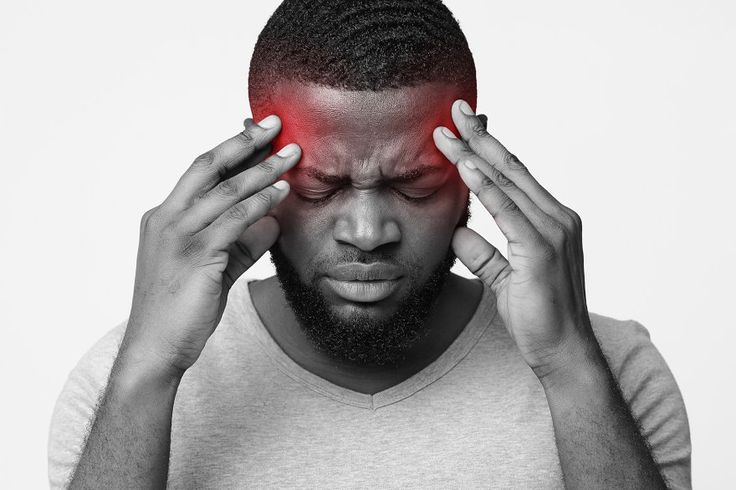
A headache is pain in the head. Some people also feel it in the scalp, face, jaw, or neck. The pain can feel dull, sharp, throbbing (beating), or like tight pressure.
A headache may last for minutes, hours, or even days, depending on the cause.
Common Causes of Headaches
1) Stress and tension
Stress, worry, and mental tiredness can cause tension headaches. This can happen with long working hours, family pressure, or financial stress.
It often feels like a tight band or heavy pressure around the head.
2) Lack of sleep
Sleeping too little, sleeping at different times each day, or poor-quality sleep can trigger headaches. Late-night phone use, shift work, noise, and stress can also affect sleep.
3) Dehydration (not drinking enough water)
When you do not drink enough water, you may get a dehydration headache. This is common in hot weather, when you sweat a lot, during fever, or with diarrhoea and vomiting.
4) Hunger or skipping meals: Skipping meals can lower blood sugar and trigger headache, weakness, shaking, or dizziness, especially if you are busy, travelling, or fasting.
5) Eye strain: Staring at a phone, computer, or reading for many hours can strain the eyes and cause headaches. If you squint, get blurry vision, or sit very close to screens, you may need an eye test or glasses.
6) Infections and illnesses: Some illnesses can cause headache, such as malaria, flu/colds, sinus infection, viral infections, and high blood pressure.
You may also have fever, body pains, weakness, nausea, or a blocked/runny nose, depending on the illness.
Common Types of Headaches
Tension Headaches
These are the most common type of headaches. They are commonly linked to stress, fatigue, poor posture, or lack of sleep.
Common symptoms include:
- Mild to moderate pain
- Tight pressure around the forehead (like a band)
- Tightness in the scalp, jaw, shoulders, or neck
Migraine Headaches
Migraines are usually more severe and may cause the following:
- Throbbing (beating) pain, often on one side
- Feeling sick (nausea) or vomiting
- Sensitivity to light, noise, or strong smells
Some people notice warning signs called aura before a migraine, such as flashing lights, blurred vision, or tingling in the face or hand.
Sinus Headaches
These headaches are associated with sinus infections or inflammation. Symptoms may include:
- Pain or pressure in the face (forehead, cheeks, around the eyes)
- Blocked nose or thick nasal discharge
- Fever (sometimes)
When Should You Worry About a Headache?
Although many headaches are harmless, some may require urgent medical attention.
Seek medical care immediately if you have a headache that:
- Starts suddenly and is extremely severe (the “worst headache of your life”)
- Happens after a head injury
- Comes with weakness, numbness, face drooping, or difficulty walking
- Comes with speech difficulties, confusion, fainting, or seizures
- Comes with a stiff neck and high fever
- Gets worse over days, or is very different from your usual headaches
Persistent or frequently recurring headaches should also be evaluated by a healthcare professional.
African Healthcare Realities
In many communities, people may quickly assume a headache is malaria. Malaria can cause headache, but it is not the only cause.
If possible, get tested (for example, a malaria rapid test) before taking antimalarial medicine. Taking medicines “just in case” can delay finding the real cause and may lead to side effects.
Daily life factors can also trigger headaches, such as long hours at work or school, long commutes/traffic, heat, dehydration, missed meals, and poor sleep.
What Can Help Reduce Headaches?
Simple steps that may help prevent or reduce headaches include:
- Drink enough water (more in hot weather or if you are sweating)
- Eat regular meals (do not skip breakfast if you can help it)
- Sleep at a regular time and aim for enough rest
- Take short breaks from screens; reduce brightness and avoid using your phone in the dark
- Manage stress (deep breathing, stretching, short walks, talking to someone you trust)
- Improve posture (especially if you sit, braid hair, sew, drive, or use a computer for long hours)
Be careful with frequent pain medicine. Using painkillers too often (for example, most days of the week) can sometimes cause “medicine-overuse headache” and can also harm the stomach, kidneys, or liver. If you need pain medicine often, please see a healthcare professional.
Headaches are common. They may be caused by stress, dehydration, poor sleep, missed meals, infections, or other medical conditions.
Many headaches improve with rest and simple healthy habits. But do not ignore headaches that are severe, unusual, or keep coming back—get medical advice so the cause can be found early.
Related Topics

- World Health Organization. Migraine and other headache disorders [Internet]. Geneva: World Health Organization; 2025 Oct 24 [cited 2026 May 1]. Available from: https://www.who.int/news-room/fact-sheets/detail/headache-disorders
- National Institute of Neurological Disorders and Stroke (NINDS). Headache [Internet]. Bethesda (MD): National Institutes of Health; 2026 Mar 13 [cited 2026 May 1]. Available from: https://www.ninds.nih.gov/health-information/disorders/headache
- National Center for Complementary and Integrative Health (NCCIH). Headaches: What You Need To Know [Internet]. Bethesda (MD): National Institutes of Health; [cited 2026 May 1]. Available from: https://www.nccih.nih.gov/health/headaches-what-you-need-to-know
- Headache Classification Committee of the International Headache Society (IHS). The International Classification of Headache Disorders, 3rd edition. Cephalalgia. 2018;38(1):1-211. doi:10.1177/0333102417738202
- National Institute for Health and Care Excellence (NICE). Headaches in over 12s: diagnosis and management (CG150) [Internet]. London: NICE; 2012 Sep 19 [updated 2025 Jun 3; cited 2026 May 1]. Available from: https://www.nice.org.uk/guidance/cg150
- American College of Emergency Physicians Clinical Policies Subcommittee (Writing Committee) on Acute Headache; Godwin SA, Cherkas DS, Panagos PD, Shih RD, Byyny R, Wolf SJ. Clinical policy: critical issues in the evaluation and management of adult patients presenting to the emergency department with acute headache. Ann Emerg Med. 2019;74(4):e41-e74. doi:10.1016/j.annemergmed.2019.07.009
- Ailani J, Burch RC, Robbins MS; Board of Directors of the American Headache Society. The American Headache Society consensus statement: update on integrating new migraine treatments into clinical practice. Headache. 2021;61(7):1021-1039. doi:10.1111/head.14153
- World Health Organization. Diagnostic testing for malaria [Internet]. Geneva: World Health Organization; [cited 2026 May 1]. Available from: https://www.who.int/activities/diagnostic-testing-for-malaria
Key Messages
- Most headaches are not dangerous and improve with rest, water, food, and pain medicine taken correctly.
- Do not assume every headache is malaria. If you also have fever, chills, body pains, or you live in a malaria area, try to get a malaria test before taking antimalarial drugs.
- Go to a clinic or hospital urgently if the headache is sudden and very severe, follows a head injury, comes with weakness/numbness, confusion, seizures, stiff neck, or high fever.
- If headaches keep coming back (for example, weekly) or disturb sleep/work/school, see a healthcare professional.